Helping Your Child Read at Home: 5 Simple Tips for Parents
10 November 2026 · 3 min read · By the SomaRevision team
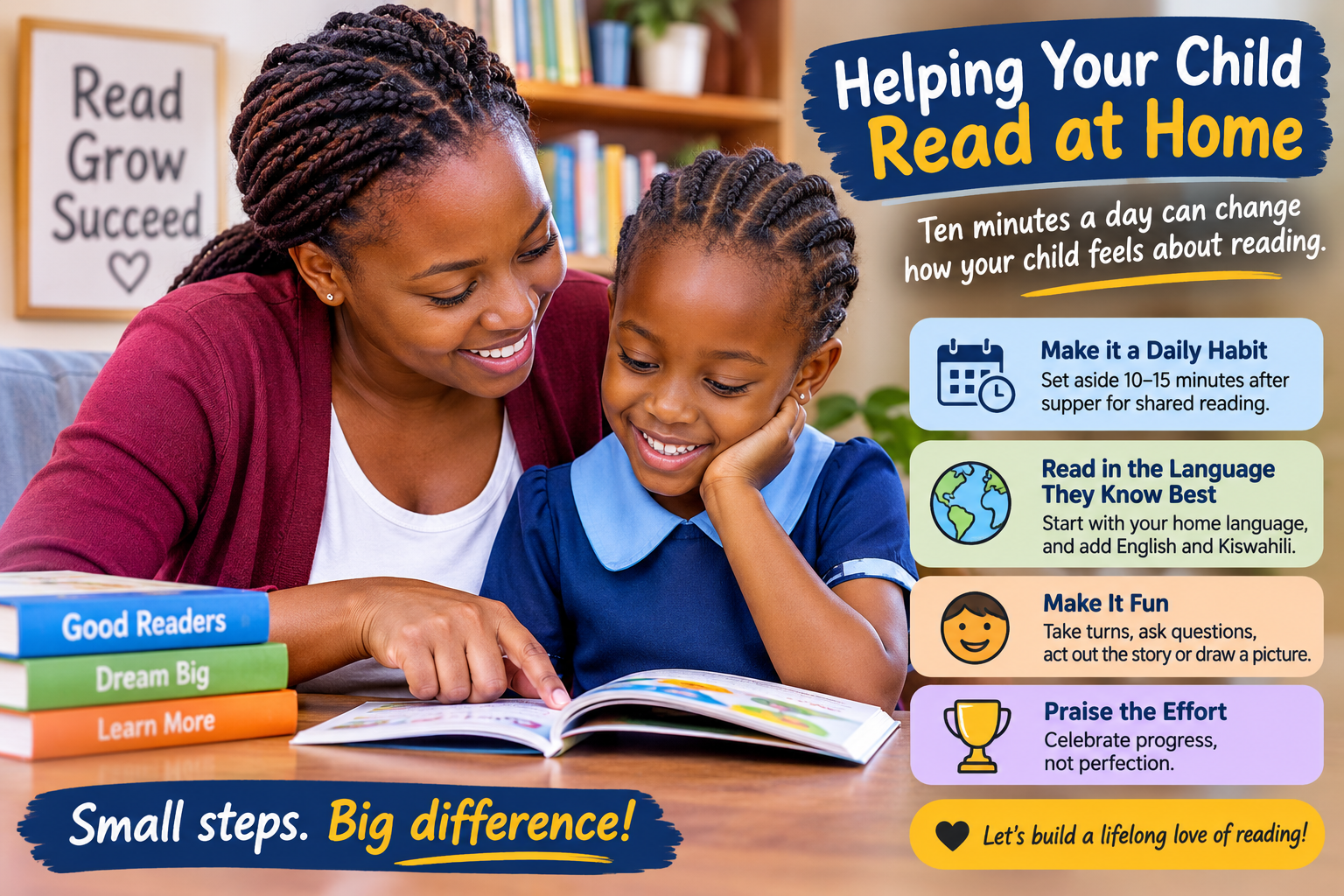
Discover 5 simple ways to help your child read at home. Build reading habits, improve literacy and make learning fun with these practical tips for parents.
Helping your child develop strong reading skills does not require expensive books, special equipment or professional teaching experience. Just 10–15 minutes of reading together every day can make a big difference.
Reading at home helps children build vocabulary, improve comprehension, develop confidence and discover the joy of learning. For children in Lower Primary, regular reading practice is especially important as they develop foundational literacy skills.
Here are five simple ways you can support your child's reading journey at home.
1. Make Reading a Daily Habit
Set aside 10–15 minutes each day for reading. Choose a quiet, comfortable time, such as after supper or before bedtime.
Read together regularly, even when you have a busy schedule. Short, consistent reading sessions are more beneficial than long sessions that happen only occasionally.
Tip: Let your child choose a story they enjoy. This makes reading something to look forward to rather than a daily chore.
2. Start with a Language Your Child Understands
Children learn more confidently when they understand the language being used.
Begin with stories in your child's familiar home language. These stories help develop vocabulary, listening skills and comprehension while building a love for reading.
Gradually introduce English and Kiswahili reading materials as your child's language skills grow.
Remember: Building strong reading foundations in a familiar language can support learning additional languages.
3. Make Reading Fun and Interactive
Reading should be an enjoyable experience, not just another school activity.
Try these simple activities:
- Take turns reading: Read one page and let your child read the next.
- Predict the story: Ask what your child thinks will happen next.
- Act it out: Use different voices or pretend to be the characters.
- Draw a favourite scene: Let your child illustrate something from the story.
- Talk about the story: Ask questions about the characters and events.
These activities help children develop comprehension, imagination and confidence.
4. Be Patient and Praise Their Effort
Learning to read takes time. Your child may struggle with unfamiliar words, pronunciation or sentence formation.
Give them time to try before offering help. If they get stuck, gently sound out the word together and encourage them to try again.
Celebrate small achievements, such as reading a new word, completing a page or finishing a story.
Praise progress, not perfection. Encouragement helps children become confident and motivated readers.
5. Make Books Easily Accessible
Children are more likely to read when books are readily available.
Create a small reading corner at home using a few age-appropriate storybooks. You can also borrow books from a local library, exchange books with neighbours or explore free reading materials online.
You do not need a large collection. A few interesting books can provide plenty of opportunities to practise.
Small Steps Make Great Readers
Helping your child become a confident reader starts with simple actions at home. Read together, ask questions, encourage curiosity and celebrate every improvement.
Remember, you do not have to be a teacher to make a difference. Your time, patience and encouragement can help your child develop a lifelong love of reading.
Start today. Pick a story, spend 10 minutes reading together and give your child a reason to love books.
Happy reading from SomaRevision!
Put it into practice
Test yourself with a free quiz, or find a past paper for your grade.