Five Effective Ways to Use Past Papers for Exam Revision
10 November 2026 · 2 min read · By the SomaRevision team
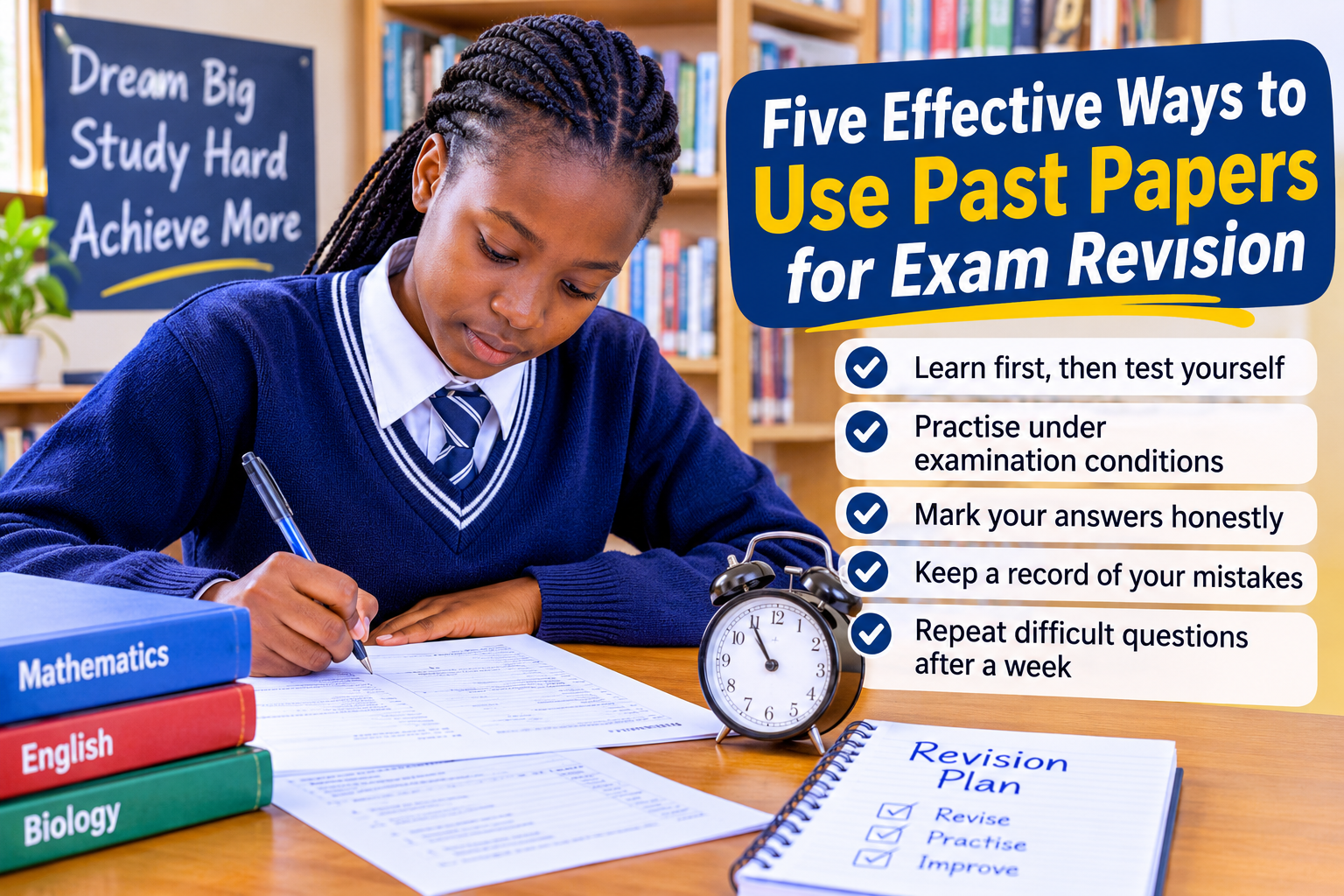
Discover five effective ways to use past papers for exam revision. Learn how to practise, mark your answers and improve your examination performance.
Past papers are among the most effective tools for exam preparation. They help learners understand examination patterns, identify areas of weakness, improve time management and build confidence before the actual examination.
However, simply answering past papers is not enough. To get the best results, you need to use them strategically.
Here are five effective ways to use past papers to improve your examination performance.
1. Learn the Topic Before Testing Yourself
Before attempting questions from a particular topic, make sure you understand the content.
Revise your notes, textbooks and class materials first. Once you are comfortable with the topic, attempt related past paper questions.
Starting too early without understanding the topic may discourage you because you will struggle to answer most questions.
Tip: Revise one topic at a time before attempting questions related to it.
2. Practise Under Examination Conditions
Do not treat every past paper as an ordinary homework assignment. Practise as though you are sitting for the actual examination.
- Find a quiet place to work.
- Set a timer according to the examination duration.
- Avoid checking your notes or textbooks.
- Attempt all questions within the allocated time.
- This helps you develop time management skills, concentration and confidence.
3. Mark Your Answers Honestly
After completing a paper, use the official marking scheme to assess your answers.
Be strict when awarding yourself marks. Do not give yourself marks simply because your answer sounds similar to the expected response.
Identify the questions you answered correctly and those where you lost marks.
Honest marking helps you understand your actual level of preparation.
4. Keep a Record of Your Mistakes
One of the biggest benefits of using past papers is discovering what you do not understand.
Create a revision notebook where you record questions you answered incorrectly or struggled with.
For each mistake:
- Write down the question or topic.
- Identify why you lost marks.
- Revise the relevant concept.
- Attempt a similar question.
Your mistakes should guide your next revision session.
5. Repeat Difficult Questions After a Week
Do not attempt a question once and forget about it.
After about one week, revisit the questions you previously struggled with. Try answering them without referring to your notes or previous solutions.
If you can now answer them correctly and explain your reasoning, you are making real progress.
Repeated practice strengthens understanding and helps you remember what you have learned.
Final Thoughts
Past papers are not just examination practice materials; they are tools for identifying weaknesses and measuring improvement.
The secret is to revise, practise, mark honestly, learn from your mistakes and repeat difficult questions.
Remember: It is not about how many past papers you complete, but how much you learn from each one.
Keep practising with SomaRevision and make every revision session count!
Put it into practice
Test yourself with a free quiz, or find a past paper for your grade.